
By Paige Brewer, Account Manager
AI and agentic technology dominated the conversation at Future of Media London 2026. But the event highlighted something much bigger: the media landscape is changing at pace, and the industry is having to rethink not just how it buys media, but what makes media valuable in the first place.
Across the sessions, the Bluestripe team identified three themes that stood out: the growing importance of creators as a mainstream marketing channel, the emergence of agentic media buying, and the value of quality journalism.
But alongside the excitement about innovation, there were some important questions about the future of the industry that perhaps didn't get quite enough attention.
AI: Is media buying getting better, or just faster?
Like any other event this year, you couldn’t get away from talks on AI. Agentic technology remained the hot topic, with the debate continuing over whether it is genuinely improving media effectiveness or simply accelerating existing processes.
One session that particularly stood out was 'Has Agentic AI Made Media Buying Better... or Just Faster?'
Featuring Lauren McGuire, Regional Vice President of Salesforce, Laura Kell, Chief Data & Product Officer, Havas Media Network, Thomas Biedermann, Global Head of Media & Advertising at Star Global and Tom Kelleher, Director of Emerging Technology, The Telegraph, the panel, chaired by Jack Benjamin at The Media Leader, offered a refreshingly nuanced perspective on the subject.
Rather than simply celebrating the efficiencies agentic AI promises, the discussion explored wider implications for the industry. It also covered concerns about sustainability, the growing dominance of major platforms, and the potential for a race to the bottom on pricing.
It was a useful reminder that making a process faster doesn't necessarily make it better. As agentic buying becomes more established, the industry needs to think carefully about the quality of decisions being made, who controls the technology and, ultimately, who benefits.
The growing power of creators and quality media
Another clear takeaway was the growing importance of creators within the marketing mix. Creators are no longer simply an interesting addition to a campaign or a way of reaching niche audiences. They have become an important channel in their own right, offering brands the opportunity to build relevance, credibility and more meaningful connections with audiences.
This shift is also being reflected in the media industry itself. The launch of Creator Age, a new platform from New Digital Age dedicated to the creator economy, is a timely example of how significantly this space has evolved. The creator economy is no longer a side conversation; it is becoming an established and increasingly important part of the wider media and marketing landscape.
At the same time, the importance of quality journalism was a recurring theme. A notable and enjoyable session was the political debate, 'Another Year of Political Punch and Judy: A Whirlwind from Washington to Westminster', which sparked a lively discussion about the state of politics worldwide. It also reminded us of the important role newsbrands continue to play in telling stories with authority, trust and credibility.
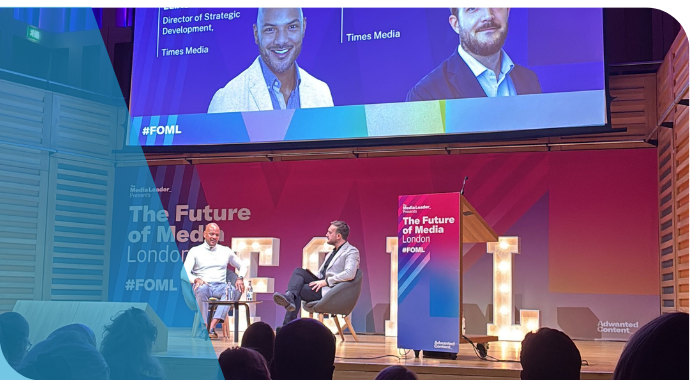
This was particularly evident in the Times Media session, which showcased how its premium platform continues to deliver news to audiences, alongside upcoming product innovations and the opportunities created by a genuinely cross-channel approach.
From the media zoo to the jungle
In Omnicom’s session, it offered an interesting analogy for how the media landscape has evolved: from a 'zoo' to a 'jungle'.
For much of the past twenty years, media consumption was comparatively contained. Audiences had a more defined set of channels and environments, and brands could plan their communications around relatively predictable patterns of behaviour.
Today, that world has changed dramatically. We live in an environment of constant distraction, with audiences moving between platforms, content, creators and communities. Attention is fragmented, competition is relentless, and brands and agencies have to work harder than ever to make themselves heard.
Final thoughts: The future of media is about more than technology
Future of Media London 2026 reinforced that we are at an interesting point of transition. AI and agentic are moving from experimentation towards practical application. Creators are becoming an increasingly important part of the media mix. Quality journalism and trusted platforms remain valuable.
But perhaps the biggest takeaway is that, despite all the technological change, the fundamentals haven't disappeared. Understanding audiences, creating compelling work, building trust and earning attention remain at the heart of effective media.